
U.S. pricing basis and calculation
The method presets use HomeGuide’s U.S. termite treatment cost guide: $3–$20 per linear foot for chemical soil treatment, $7–$12 per linear foot for bait stations, $1–$4 per square foot for fumigation, $1–$3 per square foot for tented heat treatment, and $6–$8 per treated square foot for localized micro treatment. HomeGuide also reports $200–$400 per year for bait monitoring. Angi’s 2026 tenting guide independently reports $1–$4 per interior square foot for fumigation and $1–$3 for heat treatment.
| Selected method | Calculator measure |
|---|---|
| Liquid soil barrier | Exterior perimeter × $3–$20/linear ft |
| Bait station system | Exterior perimeter × $7–$12/linear ft |
| Whole-home fumigation | Total interior area × $1–$4/sq ft |
| Whole-home heat | Total interior area × $1–$3/sq ft |
| Localized micro treatment | Entered treatment zone × $6–$8/sq ft |
Which termite treatment should I choose?
Do not choose solely by price. A licensed professional should identify the termite species, locate activity, assess construction and moisture conditions, and recommend an appropriate method. Subterranean colonies are commonly addressed from the soil with liquid barriers or bait systems. Drywood infestations may require localized treatment or whole-structure fumigation or heat, depending on spread.
Why does the calculator use different measurements?
Pricing conventions differ by method. Perimeter treatments protect or treat the soil around a structure, while tenting covers the whole building and is commonly quoted using total interior area. A localized treatment should use only the confirmed treatment zone.
Does treatment include termite-damage repair?
Usually not unless the written contract says so. Treatment targets active termites; damaged sill plates, joists, subfloors, drywall, trim, and other materials can require separate contractors. Enter a repair amount only after inspection or a written allowance.
What should I compare in termite quotes?
Compare the identified species, treatment map, product and application method, drilling or trenching, station count and spacing, preparation, follow-up visits, annual fees, warranty term, retreatment coverage, repair coverage, exclusions, transferability, and cancellation terms.
Is a free inspection the same as a real-estate WDO report?
Not necessarily. A sales inspection may be free, while a wood-destroying-organism report for a property transaction can be a separate paid service with state- or lender-specific requirements. Enter the quoted report fee instead of assuming it is included.
A termite treatment cost calculator gives you a realistic budget before pest control companies start quoting. Because different treatment methods are priced on completely different measurements — some by perimeter, others by interior area — comparing quotes without understanding that is genuinely difficult.
Below, you’ll find researched 2026 rates by method, what each treatment actually addresses, and a free tool that builds your budget instantly.
Start With an Inspection, Not a Price
This matters before any cost discussion.
A licensed professional should identify the termite species, locate the activity, assess your construction and moisture conditions, then recommend a method. Choosing treatment by price alone frequently means paying for something that doesn’t address your actual problem.
Why species identification matters:
- Subterranean colonies live in soil and enter from below
- Drywood termites live entirely inside the timber
- Formosan subterranean colonies are larger and more aggressive
- Each requires a fundamentally different approach
Consequently, a perimeter soil treatment won’t reach drywood termites inside your walls. Equally, fumigation won’t eliminate a soil colony that simply re-enters afterwards.
How Much Does Termite Treatment Cost?
Pricing varies by method, and each uses its own measurement basis.
| Method | Rate | Measured by |
|---|---|---|
| Whole-home heat | $1 – $3 / sq ft | Interior floor area |
| Whole-home fumigation | $1 – $4 / sq ft | Interior floor area |
| Liquid soil barrier | $3 – $20 / linear ft | Exterior perimeter |
| Localized micro treatment | $6 – $8 / sq ft | Treated zone only |
| Bait station system | $7 – $12 / linear ft | Exterior perimeter |
On a typical home with a 160 ft perimeter and 2,000 sq ft interior:
- Liquid barrier — $480 to $3,200
- Bait stations — $1,120 to $1,920
- Fumigation — $2,000 to $8,000
- Heat treatment — $2,000 to $6,000
Figures come from HomeGuide’s termite treatment cost guide, with fumigation and heat cross-checked against Angi’s 2026 tenting guide.
👉 Try the free Termite Treatment Cost Calculator
Why the Measurement Basis Differs
This trips up almost everyone comparing quotes.
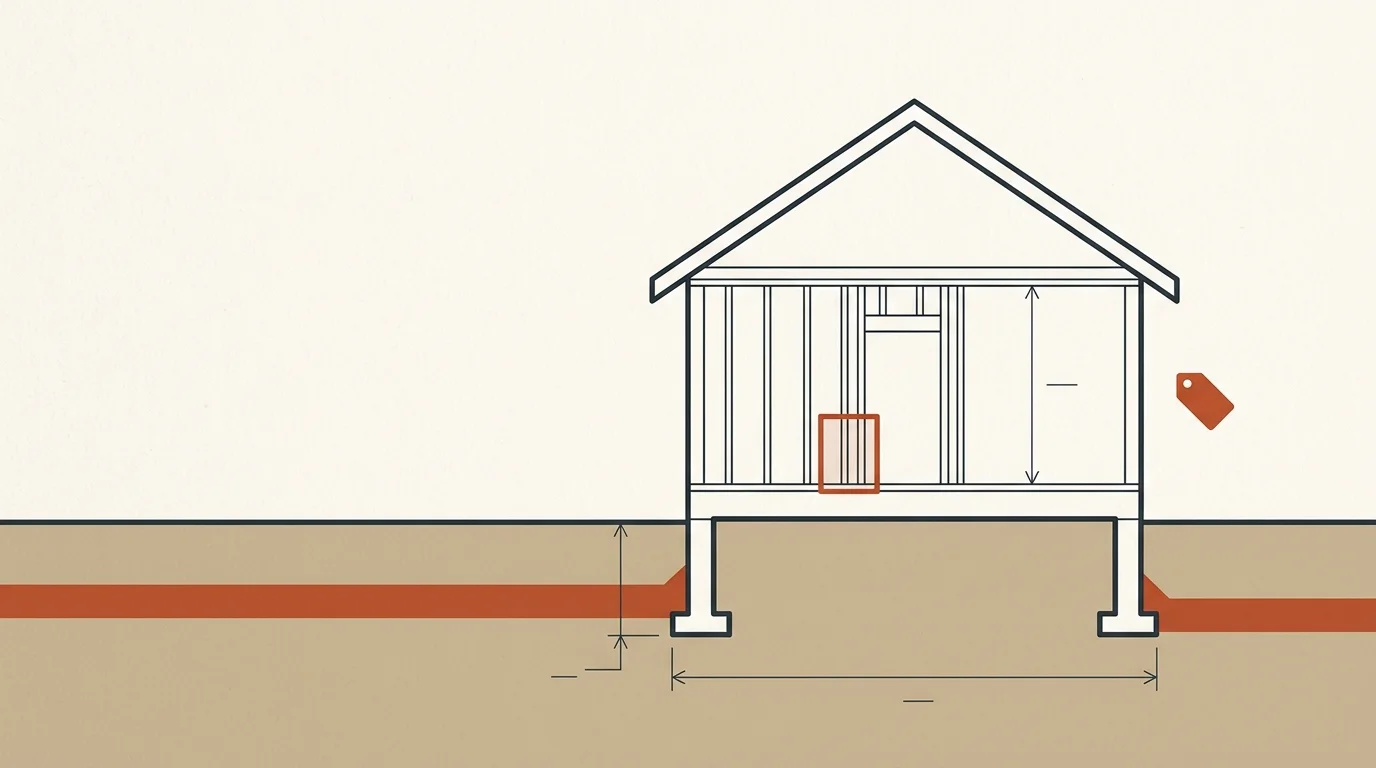
Perimeter-based methods treat the soil around your structure. Since the goal is a continuous barrier or monitoring ring, linear feet of exterior perimeter is the natural measure.
Whole-structure methods cover the entire building. Because tenting or heating fills the interior volume, total interior floor area across all floors is used.
Localized treatment targets a confirmed zone only. Therefore, measure just the affected area rather than the whole home.
Consequently, a $10/linear ft bait quote and a $2/sq ft fumigation quote aren’t directly comparable. The calculator applies the correct basis automatically once you pick a method.
Liquid Soil Barrier Treatment
Cost: $3 – $20 per linear foot
The widest range of any method, largely because application varies enormously.
What drives the spread:
- Whether trenching alone or drilling through concrete is needed
- Slab, crawl space or basement construction
- Patios, driveways and walkways requiring drilling
- Product selected and application depth
- Soil type and drainage conditions
Homes with extensive hardscaping around the foundation sit at the top of the range, since every slab must be drilled at intervals and patched afterwards.
Bait Station Systems
Cost: $7 – $12 per linear foot, plus $200 – $400 per year monitoring
Bait systems work differently from barriers. Rather than creating a chemical zone, stations are installed around the perimeter and monitored over time.
Ongoing monitoring matters here. Over five years, that’s an additional $1,000 to $2,000 on top of installation.
The calculator shows monitoring separately from initial treatment, since one is a capital cost and the other is recurring. When comparing a bait quote against a liquid barrier, factor the full monitoring period into your comparison.
Fumigation and Heat Treatment
Both are whole-structure treatments requiring you to vacate.
| Fumigation | Heat treatment | |
|---|---|---|
| Cost | $1 – $4 / sq ft | $1 – $3 / sq ft |
| Duration out of home | 2 – 3 days | 1 day typically |
| Food and medicine | Must be removed or bagged | Usually remains |
| Plants | Must be removed | Must be removed |
| Residual protection | None | None |
Neither method leaves residual protection. Consequently, re-infestation is possible afterwards, which is why a follow-up prevention plan usually forms part of the recommendation.
Budget for displacement. Hotel costs, meals and pet boarding across two or three days add up, and they sit entirely outside the treatment quote.
Termite Inspection Cost
Inspections come in two forms, and the distinction matters.
Free sales inspection — offered by pest control companies as a lead generator. Useful for identifying a problem, though the inspector has a commercial interest in the outcome.
Paid WDO report — a wood-destroying-organism report for property transactions. Typically $75 to $150, with state or lender-specific requirements.
Rather than assuming a free inspection covers a real-estate transaction, check what your lender or state requires. Those are genuinely different services.
Termite Damage Repair Is Separate
This surprises many homeowners, so it’s worth stating plainly.
Treatment eliminates active termites. It does not repair what they’ve already eaten.
Repairs frequently needed:
- Sill plates and rim joists
- Floor joists and subfloor
- Wall studs and framing
- Drywall and trim
- Hardwood flooring
Repair costs range from a few hundred dollars for cosmetic trim to tens of thousands where structural members are compromised. Additionally, structural repairs often require a separate contractor entirely.
Enter a repair figure only after an inspection or a written allowance. Guessing at this number serves nobody.
How to Use the Termite Treatment Cost Calculator
Follow these steps for an accurate budget.
1 — Enter your measurements
Provide exterior perimeter and total interior area, or calculate from footprint dimensions.
2 — Record your inspection findings
Select the identified species and observed scope.
3 — Choose the recommended method
Use what your licensed professional recommended, not the cheapest option.
4 — Enter the treated zone if localized
Micro treatment prices only the confirmed area.
5 — Select your pricing basis
Use published ranges, or enter a contractor’s actual quoted rates.
6 — Add monitoring if using bait
Set the number of years you want to budget.
7 — Enter quoted extras
Include inspection fees, repairs, lodging and preparation costs.
8 — Review the compatibility notice
The tool flags when your selected method may not suit the identified species.
Comparing Termite Quotes
Termite contracts vary more than most home services. Ask every company to specify:
- The identified species and evidence found
- A treatment map showing where work occurs
- Product and application method
- Drilling or trenching required
- Station count and spacing for bait systems
- Preparation you must complete
- Follow-up visit schedule
- Annual fees after year one
- Warranty term and what it covers
- Retreatment coverage
- Whether repairs are covered
- Transferability if you sell
- Cancellation terms
Termite bonds deserve particular attention. Since coverage differs enormously — some cover retreatment only, others include repair — read what’s actually covered rather than assuming.
Frequently Asked Questions
How much is termite treatment?
Costs range from $480 for a basic liquid barrier to $8,000 or more for whole-home fumigation, depending on method and home size.
Is the termite treatment cost calculator free?
Yes, entirely free with no sign-up. Moreover, you can download a PDF or copy the summary for comparing quotes.
How much does termite tenting cost?
Fumigation runs $1 to $4 per square foot of interior area. On a 2,000 sq ft home, that’s $2,000 to $8,000.
Is a free termite inspection legitimate?
Often, though it’s a sales visit. For a property transaction, you’ll typically need a paid WDO report instead.
Does treatment cover termite damage repair?
Usually not, unless your written contract says so. Treatment addresses active termites, whereas structural repairs are a separate cost.
How long does termite treatment last?
Liquid barriers typically last 5 to 10 years. Bait systems require ongoing monitoring, while fumigation and heat leave no residual protection at all.
Budget Your Treatment Now
Rather than guessing, enter your home measurements and recommended method to see a costed breakdown immediately. Afterwards, you’ll know whether a quote sits within a reasonable range.
1 thought on “Termite Treatment Cost Calculator: 2026 Price Guide”