
A pool resurfacing cost calculator helps you budget one of the most significant — and most overdue — maintenance items in pool ownership. Pool plaster and finish materials deteriorate over 10 to 20 years, and once the surface starts roughening, staining, or delaminating, resurfacing becomes a when-not-if decision. Our pool resurfacing cost calculator factors in your pool’s size, shape, current surface type, and desired finish material to produce an estimate that matches your actual project.
Enter your pool details below for a personalised number. Then read the full guide for 2026 per-square-foot pricing by finish type, the resurfacing process from drain to refill, and the maintenance practices that extend the life of your new surface.
Calculation method and important limitations
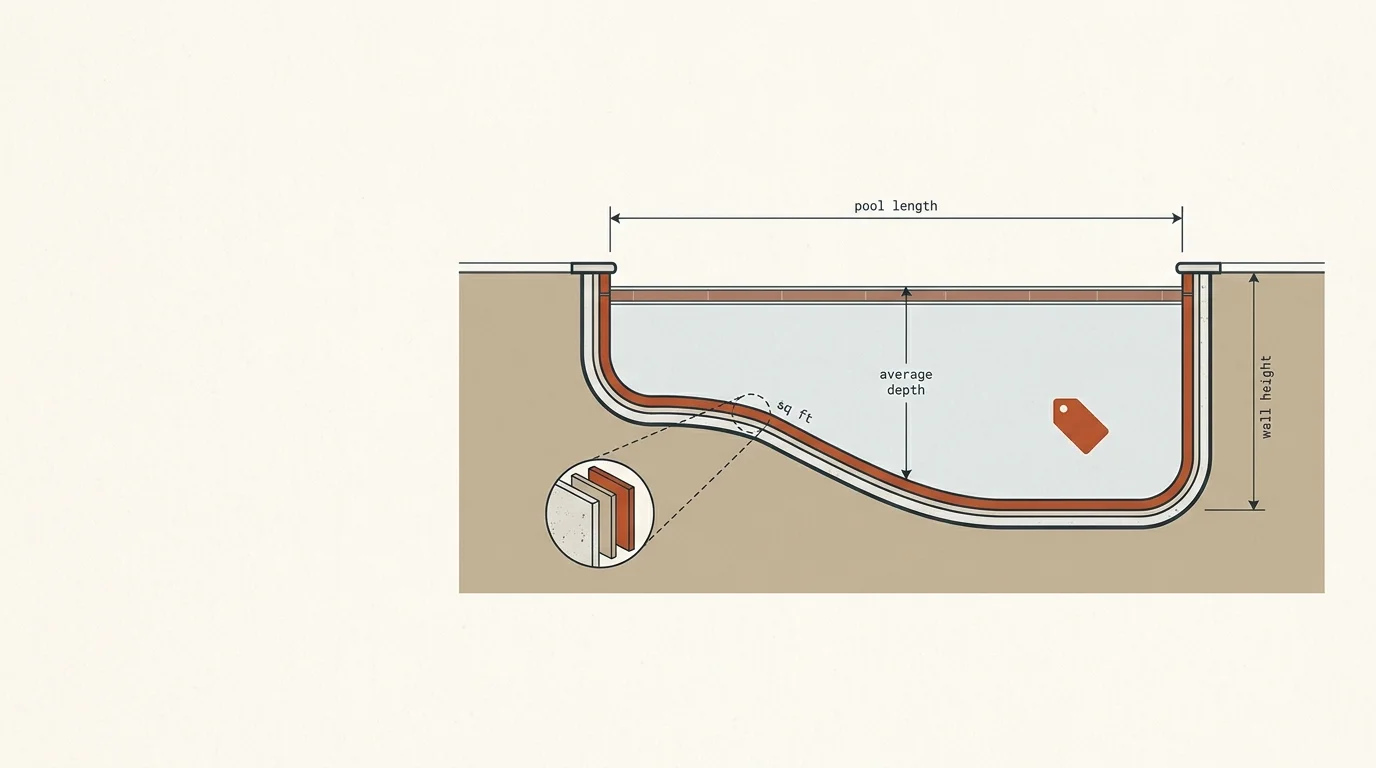
The calculator estimates interior surface area from the pool floor, wall perimeter, average depth, shape and selected step/feature complexity. It multiplies that area by the chosen finish and preparation rates, then adjusts for access and local cost level. Waterline tile and coping are calculated by perimeter; repairs, refill, startup and optional equipment are added separately.
HomeGuide reports a typical resurfacing range of about $6,000–$15,000, with plaster around $6–$8 per square foot, quartz around $7–$10, pebble around $7–$15, polymer coatings around $10–$15 and tile around $8–$30 or more. Swimply’s 2026 guide places basic plaster around $5,000–$10,000, quartz around $7,000–$15,000 and pebble around $9,000–$20,000 or more. Angi notes that fiberglass resurfacing averages about $6,500 per 1,000 square feet, while limited gel/topcoat work may cost much less. These are planning benchmarks, not bids.
Do not drain a pool without evaluating groundwater, hydrostatic pressure, shell condition and local discharge rules; an empty pool can lift or crack. Surface coatings must be compatible with the existing shell and finish. Structural cracks, leaks, plumbing failures, bond-beam damage and coping movement require diagnosis before cosmetic resurfacing. Vinyl pools use replacement liners rather than plaster-style resurfacing.
How a Pool Resurfacing Cost Calculator Works
Every pool resurfacing cost calculator starts with your pool’s interior surface area — the floor and walls that receive the new finish. Then, it applies the per-square-foot rate for your chosen material. Finally, it adds prep work (chipping, bond coating), tile and coping repair, equipment pad time, and refill costs to produce a complete estimate.
As a result, the output covers the full scope from drain to swim-ready. However, resurfacing projects frequently uncover additional issues — cracked shell sections, failed tile lines, corroded fittings, and deteriorated plumbing penetrations — that add unplanned cost. Consequently, building a 10% to 15% contingency into your budget is standard practice.
Average Pool Resurfacing Cost in 2026
Pool resurfacing costs $3,000 to $15,000+ for most residential pools, with the average project falling between $5,000 and $10,000. Specifically, here is how costs break down by finish type for a standard 12,000 to 15,000 square-foot interior surface area (roughly a 14×28 to 16×32 pool).
- White plaster: $3,000 – $5,500. The traditional, most affordable finish.
- Coloured plaster: $4,000 – $7,000. Pigmented plaster in blue, grey, or custom tones.
- Pebble finish (exposed aggregate): $6,000 – $12,000. Durable and visually rich with natural stone aggregates.
- Quartz aggregate: $5,500 – $10,000. Coloured quartz crystals blended with plaster for durability and sparkle.
- Glass bead finish: $7,000 – $15,000+. Recycled glass beads for a shimmering, luminous appearance.
Furthermore, larger pools, freeform shapes, and pools with spas, benches, and steps increase surface area and cost proportionally. Additionally, pools requiring structural repair before resurfacing add $1,000 to $5,000 for crack injection, shell patching, or delamination removal.
Pool Resurfacing Cost Calculator: Price by Finish Material
The finish material determines both cost and longevity. Here is a detailed comparison.
White Plaster ($3–$5 per sq ft)
Traditional white marcite plaster is the most affordable option and has been the industry standard for decades. It produces the classic light blue pool colour when underwater. However, white plaster is also the least durable finish — it roughens within 5 to 7 years and typically needs resurfacing every 7 to 12 years. Furthermore, it stains more easily than aggregate finishes and requires diligent water chemistry maintenance to prevent etching and scaling.
Coloured Plaster ($4–$6 per sq ft)
Coloured plaster adds pigment to the standard marcite mix, creating deeper water tones — dark blue, grey, black, and sand. The durability is similar to white plaster (8 to 12 years) because the base material is the same. However, colour fading and mottling can occur, particularly with darker shades. Consequently, coloured plaster requires even more careful chemistry management than white plaster to maintain uniform appearance.
Quartz Aggregate ($5–$8 per sq ft)
Quartz aggregate finishes blend coloured quartz crystals into the plaster matrix, producing a sparkling, durable surface. They last 12 to 20 years — significantly longer than plain plaster. Additionally, the quartz crystals create a smoother, more stain-resistant surface than plaster alone. Consequently, quartz aggregate delivers the best balance of cost, durability, and appearance for most residential pools.
Pebble Finish ($6–$10 per sq ft)
Pebble finishes (PebbleTec, PebbleFina, NPP) use small natural stone pebbles exposed on the surface. They produce a natural, organic appearance and last 15 to 25 years. However, the textured surface feels rough underfoot — a concern for pools where children play frequently. PebbleFina and similar “mini pebble” products offer a smoother texture at comparable durability. Our concrete slab cost calculator covers pool deck costs that often coincide with resurfacing projects.
Glass Bead Finish ($7–$12+ per sq ft)
Glass bead finishes use recycled glass beads that create a luminous, shimmering effect underwater. They are the most visually striking option and last 15 to 20+ years. However, they carry the highest material cost. As a result, glass bead finishes are typically reserved for high-end pools where the visual impact justifies the premium.
Pool Resurfacing Cost Calculator: Additional Costs
Several standard items accompany the resurfacing itself and should be included in your budget.
Tile line replacement: $1,000 to $3,500. The waterline tile is typically replaced during resurfacing because removing and reapplying plaster up to the existing tile line is impractical. Furthermore, most pool tiles are 15 to 25 years old by the time resurfacing is needed, so replacement is overdue anyway.
Coping repair or replacement: $1,500 to $5,000. The coping (the cap material at the pool edge) is often cracked, loose, or outdated. Addressing it during resurfacing avoids a separate mobilisation later.
Drain and refill: $200 to $600. Draining the pool, disposing of the water (local regulations may require proper discharge), and refilling with fresh water. Additionally, start-up chemicals for the refilled pool cost $100 to $300.
Equipment check: Many pool owners upgrade pumps, filters, or heaters during resurfacing since the pool is already drained and equipment is accessible. However, this is optional and separate from the resurfacing scope. Our home inspection cost calculator covers pool system evaluation for homeowners buying properties with pools.
The Pool Resurfacing Process
Understanding the process helps you plan around the downtime — typically 7 to 14 days from drain to swim.
First, the pool is drained completely. Then, the crew chips and prepares the existing surface — removing loose plaster, grinding high spots, and creating a rough bond surface. This step takes one to two days and generates significant dust and debris.
Second, the crew applies a bond coat to the prepared shell, followed by the new finish material. Plaster is applied by hand-trowelling in a single continuous session that must be completed without stopping — a skilled crew of four to six workers finishes a standard pool in one day.
Third, the pool is refilled immediately after the finish is applied. Water must cover the fresh surface within hours to prevent cracking. Fill time depends on your water supply — typically 12 to 24 hours for a standard pool.
Fourth, a start-up chemical program runs for 28 to 30 days. During this curing period, water chemistry must be carefully managed — brushing the surface twice daily for the first week and maintaining specific pH and calcium levels to ensure proper curing. Our interior painting cost calculator covers the home improvements that pair well with pool resurfacing for homeowners upgrading their property’s overall appearance.
Signs Your Pool Needs Resurfacing
Several indicators signal that resurfacing has moved from optional to necessary.
First, rough surface texture. When the plaster feels like sandpaper and scratches skin, the surface has deteriorated beyond acceptable comfort. This roughness also harbours algae in the microscopic crevices, making the pool harder to keep clean.
Second, staining that chemical treatment cannot remove. Metal stains (copper green, iron brown), mineral deposits, and organic staining that resist acid washing indicate the surface has become porous enough to absorb contaminants permanently.
Third, chalking and material loss. Running your hand across the surface and seeing white residue on your palm (chalking) indicates active surface erosion. Furthermore, visible aggregate exposure on a plaster pool means the top layer has worn away completely.
Fourth, structural cracks. Cracks that open and close seasonally or that show staining along their edges indicate structural movement that will worsen without repair. Resurfacing over unrepaired cracks wastes money — the cracks telegraph through the new surface. Our foundation repair cost calculator covers structural assessment costs that are relevant when pool shell integrity is in question.
How to Get the Best Price on Pool Resurfacing
Several strategies reduce costs and ensure quality results.
First, schedule in the off-season. Late fall through early spring is the slow period for pool contractors. Scheduling during this window yields 10% to 20% lower bids and faster completion. Consequently, resurfacing in winter means your pool is ready for summer.
Second, get three bids specifying material brand and application method. Pool finishes vary in quality even within the same material category. Comparing brand names (PebbleTec vs. generic pebble, for example) across bids reveals real quality differences. Furthermore, confirm the warranty — reputable finishes carry 5- to 10-year material warranties.
Third, bundle tile, coping, and resurfacing. A single mobilisation for all three saves $500 to $1,500 versus scheduling them as separate projects. As a result, bundling is the standard approach for most resurfacing contractors.
Fourth, maintain water chemistry meticulously after resurfacing. The 28-day start-up program is not optional — poor chemistry during curing causes discolouration, scaling, and premature surface failure that voids the warranty. Hiring a start-up service ($200 to $400) is money well spent if you are not confident in managing the chemistry yourself.
Frequently Asked Questions
How much does pool resurfacing cost?
Pool resurfacing costs $3,000 to $15,000 in 2026 for a standard residential pool. Specifically, white plaster runs $3,000 to $5,500, quartz aggregate $5,500 to $10,000, and pebble finishes $6,000 to $12,000. Pool size, shape, and additional work (tile, coping) determine the final number.
How long does pool resurfacing last?
White plaster lasts 7 to 12 years. Quartz aggregate lasts 12 to 20 years. Pebble finishes last 15 to 25 years. Specifically, longevity depends heavily on water chemistry maintenance — pools with consistently balanced chemistry get years more from every finish type.
How long does pool resurfacing take?
The construction phase takes 5 to 7 days (drain, prep, apply, refill). The start-up curing period runs 28 to 30 days with restricted swimming during the first week. Consequently, plan for the pool to be out of service for one to two weeks for construction plus limited use for the following month.
Can I resurface my pool myself?
Pool resurfacing is not a DIY project. Plaster application must be completed in a single continuous session by an experienced crew, and improper application creates delamination, discolouration, and surface failure within months. Furthermore, the equipment (mixers, pumps, trowels) and crew size required make this a professional-only job.
The Bottom Line on Pool Resurfacing Costs
Pool resurfacing restores your pool’s appearance, comfort, and structural integrity for another decade or more. Use our pool resurfacing cost calculator at the top of this page to estimate your project by finish type and pool size, then bring that number to contractor conversations with confidence.
All figures in this guide are 2026 planning estimates. Your actual cost will vary with pool size, finish material, and regional labour rates. Always obtain at least three itemised quotes before committing.