
Carpet remains the most popular flooring choice in American bedrooms, basements, and family rooms — and for good reason. It is warm, quiet, and forgiving underfoot. However, the gap between what homeowners expect to pay and what the final invoice reads is often wider than it should be. A carpet installation cost calculator closes that gap by factoring in room dimensions, carpet grade, padding selection, and labour rates so you get a realistic number before you step into a showroom.
Use the calculator below to build your estimate, then keep reading for an in-depth look at what drives carpet pricing, where the hidden costs live, and how to stretch your budget without sacrificing quality where it matters.
Estimate basis
Carpet and pad are calculated from purchase area, which equals measured floor area plus the selected waste allowance. Installation and removal use measured floor area. Stairs, furniture moving, subfloor repairs, door trimming, and transitions are added separately. Taxes, moisture remediation, hazardous-material testing, baseboard work, and unusual delivery charges are excluded.
Carpet Installation Cost per Square Foot in 2026
Total installed cost — carpet, pad, and labour combined — ranges from $3.50 to $14.00 per square foot for the vast majority of residential projects. That is a wide band, so the sections below break it into the three components that determine where your project lands within it.
Carpet material cost by fibre type
Fibre type is the largest cost variable in the carpet itself, and it also determines how the carpet wears, stains, and feels underfoot.
- Polyester: $1.00 – $3.50 per sq ft. Soft hand feel, excellent stain resistance, but crushes under heavy foot traffic. Best suited for bedrooms and low-traffic areas.
- Nylon: $2.50 – $6.00 per sq ft. The most durable residential fibre. Resists crushing, wears evenly, and cleans well. Ideal for hallways, stairs, and family rooms.
- Triexta (SmartStrand): $2.00 – $5.00 per sq ft. A newer fibre offering nylon-like durability with built-in stain resistance. Good all-around performer for families with children and pets.
- Olefin (polypropylene): $0.75 – $2.50 per sq ft. Moisture-resistant and affordable, but prone to crushing and oil-based staining. Best for basements and utility spaces.
- Wool: $6.00 – $20.00+ per sq ft. Natural, luxurious, and exceptionally durable. Requires professional cleaning and is sensitive to moisture. A premium choice for formal living areas.
Carpet padding cost
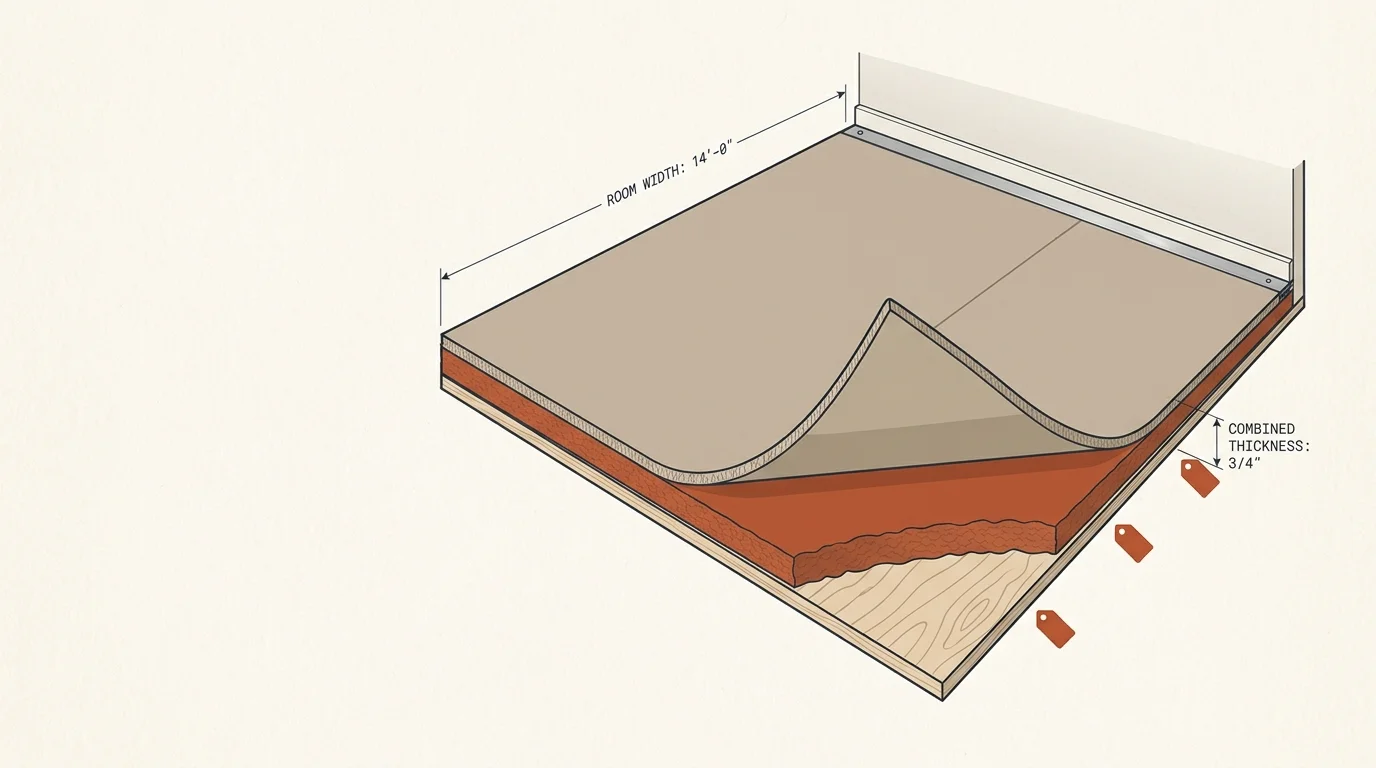
Padding is the layer beneath the carpet that determines comfort, noise reduction, and carpet lifespan. Skimping on padding to save $0.50 per square foot will cost you years of carpet life — it is the most counterproductive budget cut in the entire project.
- Basic rebond (6 lb density): $0.30 – $0.60 per sq ft. Minimum acceptable for light-traffic bedrooms.
- Standard rebond (8 lb density): $0.50 – $0.90 per sq ft. The sweet spot for most residential applications.
- Premium rebond or memory foam (10+ lb): $0.80 – $1.50 per sq ft. Excellent underfoot comfort and noise reduction. Recommended for second-floor rooms and media rooms.
- Fibre pad: $0.60 – $1.20 per sq ft. Required by some carpet warranties, especially for Berber and loop styles.
Carpet installation labour cost
Labour for carpet installation runs $0.50 to $1.50 per square foot in most markets, with the national average sitting around $0.75 to $1.00. Stairs add a per-step charge of $15 to $35 per step because they require hand-cutting, tucking, and stretching that flat-floor installation does not. Complex room shapes, closets, and transitions between rooms add modest incremental labour as well.
Some big-box retailers advertise “free installation,” which typically means the labour cost has been folded into an inflated carpet price. Compare the all-in per-square-foot price against a dedicated flooring contractor before assuming the bundled deal is actually cheaper.
Carpet Installation Cost by Room Type
Because room size, traffic level, and carpet grade recommendations differ by space, here are realistic total installed estimates for common room types in 2026.
Bedroom carpet installation cost
A standard 12×12 bedroom (144 sq ft) costs $550 to $1,400 installed depending on carpet quality. Bedrooms are low-traffic spaces where a mid-grade polyester or triexta in a plush or textured style performs well. This is one area where stepping down a fibre grade genuinely makes sense — you simply do not need nylon’s durability under a bed and a dresser.
Living room and family room carpet cost
A 15×20 living room (300 sq ft) runs $1,200 to $3,600 installed. This is a high-traffic area where nylon or triexta in a textured or patterned style pays for itself in longevity. Avoid plush styles in these rooms — they show footprints and vacuum tracks and crush visibly within a year.
Basement carpet installation cost
Basement carpet requires moisture-conscious material selection. Olefin fibre with a moisture-barrier pad, or carpet tile with built-in backing, are the standard recommendations. A 400 sq ft basement runs $1,400 to $3,200 installed. Moisture testing before installation is essential — if the slab lacks a vapour barrier, install one before the pad goes down, adding $0.50 to $1.00 per square foot.
Stairway carpet installation cost
A standard 13-step straight stairway costs $200 to $650 in carpet and labour. Curved, open, or pie-shaped stairs cost more because each tread requires custom cutting. Nylon in a low-profile, dense construction is the overwhelmingly recommended choice for stairs — this is the highest-traffic, highest-wear surface in most homes, and durability matters more here than anywhere else.
Hidden Costs in a Carpet Installation Project
The per-square-foot number gets all the attention, but the line items below are where projects quietly exceed budget.
Old carpet removal and disposal
Ripping out existing carpet and pad costs $0.50 to $1.50 per square foot if the installer handles it. This is sometimes included in labour quotes and sometimes listed separately — always confirm. DIY removal saves this cost but requires a utility knife, a floor scraper, and a plan for hauling the waste. Old carpet is heavy and bulky — a typical bedroom generates 100 to 150 pounds of waste.
Subfloor preparation and repair
Once old carpet is removed, the subfloor may reveal squeaks, uneven spots, moisture damage, or protruding fasteners. Minor levelling and squeak repair runs $1.00 to $2.00 per square foot. Plywood patching or subfloor replacement in damaged areas can add $3.00 to $6.00 per square foot for the affected sections.
Furniture moving
Most installers will move standard furniture for $50 to $150 per room. Large items like pianos, pool tables, and heavy entertainment centres are excluded and require specialty movers. Moving furniture yourself saves money and ensures nothing gets scratched — it is one of the easiest cost reductions on the project.
Seam placement and waste factor
Carpet comes in 12-foot and 15-foot rolls. Rooms wider than the roll width require seams, and seam placement affects both appearance and waste. A skilled installer places seams in low-visibility, low-traffic areas and minimises waste, but even the best layout generates 5% to 15% waste from cuts and fitting. Your calculator estimate should account for this overage.
Transitions and trim
Metal or wood transition strips between carpet and hard flooring cost $5 to $15 per transition installed. Tack strips around the room perimeter are usually included in labour, but if the existing tack strip is damaged or missing, replacement adds $0.30 to $0.60 per linear foot.
How to Choose the Right Carpet for Your Budget
The best carpet for a given room is not the most expensive one — it is the one that matches the room’s traffic level, moisture exposure, and comfort needs while staying within budget. Here is a practical decision framework:
For bedrooms and guest rooms, spend less on fibre and more on padding. A mid-grade polyester with premium padding will feel luxurious underfoot and last 10 to 15 years in a low-traffic space. For living rooms, hallways, and stairs, reverse the priority — invest in nylon or triexta fibre in a dense, textured construction. These areas see five to ten times the foot traffic of a bedroom, and cheap carpet shows it within the first year.
For basements, prioritise moisture resistance over comfort. Olefin or carpet tile with integrated backing handles the inevitable minor moisture events that basements produce. For rental properties, mid-grade nylon in a neutral colour with standard padding offers the best balance of durability, appearance, and cost. It survives tenant turnover better than polyester and cleans more effectively.
Carpet Installation Cost vs. Other Flooring Options
Carpet is often the least expensive flooring option per square foot, but the comparison is more nuanced than it first appears because lifespan and maintenance costs differ significantly.
- Carpet: $3.50 – $14.00 per sq ft installed, lasts 8 – 15 years. Requires professional cleaning every 12 – 18 months ($0.25 – $0.50 per sq ft per cleaning).
- Luxury vinyl plank (LVP): $4.00 – $10.00 per sq ft installed, lasts 15 – 25 years. Minimal maintenance beyond regular mopping.
- Hardwood: $8.00 – $18.00 per sq ft installed, lasts 25 – 100+ years with refinishing. Periodic refinishing at $3.00 – $5.00 per sq ft every 7 – 10 years.
- Laminate: $3.00 – $8.00 per sq ft installed, lasts 10 – 20 years. Cannot be refinished; replacement is the maintenance.
On a per-year basis, carpet is competitive with hard flooring in bedrooms and low-traffic rooms. In high-traffic areas, the shorter replacement cycle tilts the long-term cost equation toward hard flooring for homeowners who plan to stay in the house beyond ten years.
If you are evaluating a full-home flooring project alongside other improvements, you may also want to factor in how cosmetic updates interact with larger renovation costs. Our interior painting cost calculator is a common companion tool for homeowners budgeting a room-by-room refresh.
How to Get the Best Deal on Carpet Installation
Carpet pricing is more negotiable than most homeowners realise, particularly if you are covering multiple rooms. Here are strategies that consistently produce savings.
First, shop remnants for small rooms. Carpet remnants — leftover roll ends from larger jobs — sell at 30% to 60% off retail. A bedroom or closet project is a perfect remnant candidate because the space is small enough to cover without seams from a single piece.
Second, buy during holiday sales. Major carpet retailers run their deepest promotions around Memorial Day, Labour Day, and Black Friday. Discounts of 20% to 40% on material are common, and some include padding or installation incentives on top.
Third, compare big-box vs. specialty flooring stores. Big-box retailers offer convenience and bundled pricing, but specialty flooring stores often carry better mid-range products, provide more experienced installers, and are willing to negotiate on multi-room projects. Get at least three itemised quotes that separate material, padding, labour, and extras.
Fourth, ask about carpet upgrades vs. padding upgrades. Spending an extra $1.00 per square foot on better padding delivers more noticeable comfort and longevity improvement than spending the same dollar upgrading the carpet fibre one tier. This is the most efficient upgrade path for homeowners on a fixed budget.
Frequently Asked Questions About Carpet Installation Costs
How much does it cost to carpet a 10×12 room?
A 10×12 room (120 sq ft) costs $420 to $1,680 installed including carpet, padding, and labour. A mid-range nylon carpet with standard padding lands around $850 to $1,100 — the most common price point for this room size.
How long does carpet installation take?
A single bedroom takes two to three hours. A full house (1,500 to 2,000 sq ft of carpet) takes one to two days. Stairs add time proportional to the number of steps and complexity. Most installers can complete a standard three-bedroom home in a single day if old carpet removal is done in advance.
Should I buy carpet from the installer or separately?
Buying from the installer simplifies warranty claims and ensures material compatibility with their installation methods. However, purchasing carpet independently and hiring a separate installer can save 10% to 20% on the material component. The trade-off is that warranty disputes become more complex if a problem arises — each party may point to the other.
Does new carpet need to off-gas before use?
New carpet can emit volatile organic compounds (VOCs) for 24 to 72 hours after installation. Ventilate the room thoroughly during and after installation by opening windows and running fans. Most modern carpets meet CRI Green Label Plus certification, which limits VOC emissions to very low levels, but sensitive individuals should plan to avoid the room for the first 48 hours.
Is carpet a good choice for homes with pets?
Yes, with the right fibre selection. Nylon and triexta resist pet stains far better than polyester or olefin. Choose a solution-dyed fibre — the colour is embedded in the fibre rather than applied after manufacturing — for the best resistance to pet accidents and cleaning chemicals. Loop and Berber styles should be avoided with cats, as claws catch and pull the loops.
The Bottom Line on Carpet Installation Costs
Carpet installation is one of the most cost-effective ways to transform a room, but the “cost-effective” part only holds when you match the carpet grade to the room’s demands, invest appropriately in padding, and understand the full scope of costs before the installer arrives. Use the calculator at the top of this page to set your budget, then take that number into showroom and contractor conversations knowing exactly what you should be paying.
All figures in this guide are 2026 planning estimates based on national and regional pricing data. Your actual cost will vary with local labour rates, material availability, and project-specific conditions. Always obtain multiple itemised quotes before committing.